
Sunroom Permits in Virginia: The Essential Homeowner’s Guide
You want a sunroom. More light. More space. A spot that feels like “outside,” without the bugs and weather.
Then you hear the phrase “sunroom permits in Virginia” and the fun part starts to feel… less fun.
Here’s the deal: in Virginia, a sunroom is often treated like a real home addition. That means building codes, zoning rules, setbacks, and inspections come into play—and they can vary by county, city, or town.
If you’re in Northern Virginia, Fortress Construction can help you plan the project the right way. We’re a family-owned general contractor based in Annandale, VA, with over 25 years of experience. We use design software to turn ideas into build-ready plans, and we have a Class A license plus a dedicated in-house architect and engineer—helpful when your project needs solid drawings.
Ready to feel confident instead of confused? Let’s walk through what usually triggers permits, what paperwork you’ll need, and how to avoid the most common delays.








TL;DR - Sunroom Permits in Virginia
- Most sunrooms in Virginia need a permit because they’re treated like a home addition.
- You’ll usually deal with two sets of rules: the Virginia building code (USBC) for safety and local zoning for where the sunroom can go.
- Decide early if you want a screened-in porch, three-season room or a sunroom room, because that choice can affect what details are required (insulation, windows, HVAC).
- Expect inspections at key stages to catch problems before they’re hidden.
- Permits move faster when you submit complete info.
- Permit timelines vary.
- Building without permits can lead to stop-work orders, fines, insurance issues, and resale problems.
Why Sunroom Permits Are Usually Required in Virginia
Sunroom permits in Virginia may feel like an extra hurdle, but they serve a real purpose: they help confirm your sunroom is built safely and approved by your local county/city/town.
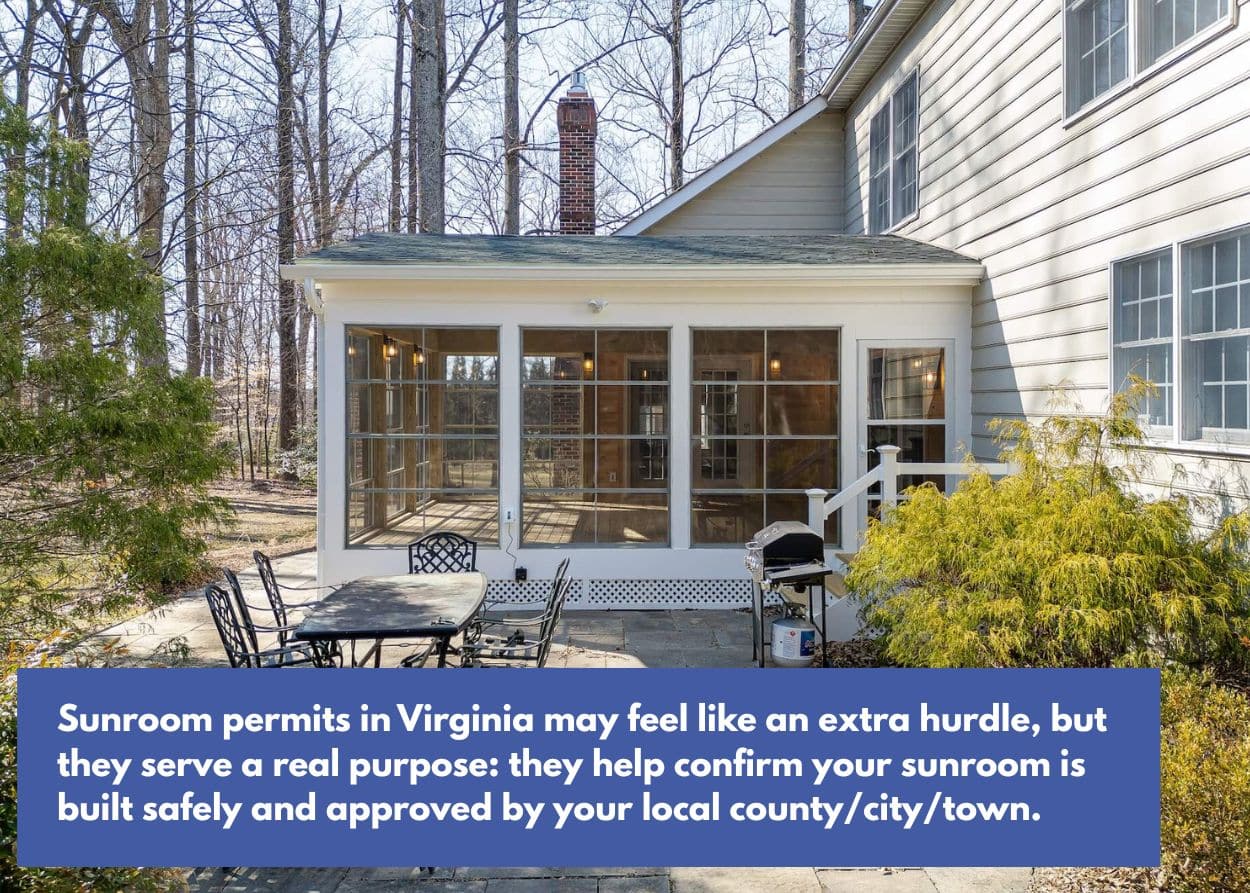
In many Virginia localities, a sunroom falls under “new addition to an existing home.”
For example:
- Fairfax County lists decks, sunrooms, and screened in-porches under new additions requiring permits.
- Loudoun County lists sunrooms among residential projects requiring permits.
So why does a sunroom trigger a permit? Because it often involves at least one of these:
- New structural framing and roof loads
- New footings, piers, or a slab
- New doors/windows that change the home’s exterior wall system
- Electrical (outlets, lighting, fans)
- HVAC (if you want true year-round comfort)
One more thing: Virginia’s statewide building code, the USBC, sets baseline safety rules for additions (things like framing, foundations, and structural requirements).
That’s the “why” behind the permit.
Now let’s talk about the two rulebooks that decide how it must be built and where it can go.
USBC vs. Zoning: The Two Approvals Your Sunroom Must Pass
We mentioned the USBC above. Next, let’s break down how the USBC and local zoning work together—and why zoning often causes the most surprises.
Think of permitting like a project that needs two green lights:
Green light #1: USBC (How it must be built)
This covers the safety stuff—structure, loads, and (if needed) electrical or HVAC.
Green light #2: Zoning (Where it can go)
This decides whether your sunroom is allowed in that exact spot on your property.
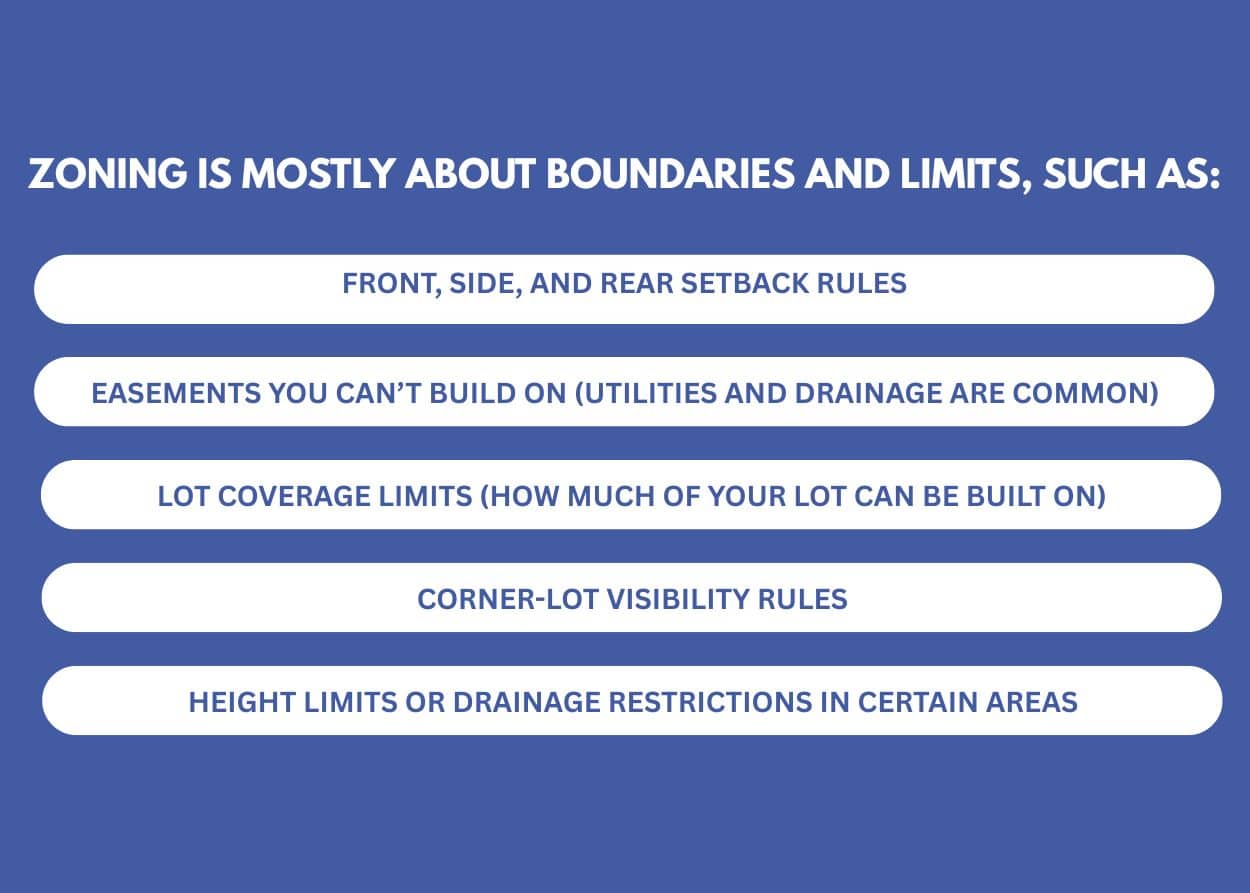
Here’s why zoning trips people up. Zoning is mostly about boundaries and limits, such as:
- Front, side, and rear setback rules
- Easements you can’t build on (utilities and drainage are common)
- Lot coverage limits (how much of your lot can be built on)
- Corner-lot visibility rules
- Height limits or drainage restrictions in certain areas
Want a quick tip?
You can usually do a quick “zoning reality check” early—before you pay for full drawings. A contractor (or designer) can look at your plat or survey and sketch the sunroom footprint to see if it fits. If it doesn’t, it’s better to learn that with a pencil than after the plans are submitted.
Screened-In Porch vs. Three-Season Porch vs. Sunroom
When homeowners say they want a “sunroom,” they’re sometimes actually thinking about a screened-in porch or a three-season porch. All three offer a more comfortable version of outdoor living. But they’re built differently—and that can affect your permit plans.
Here’s the simple breakdown.
- Screened-in porch:
A screened-in porch is built for fresh air and bug protection. It uses mesh screens (not glass windows), so it’s best for warmer months when you want shade, ventilation, and fewer mosquitoes. - Three-season porch:
A three-season porch is an enclosed outdoor living space you can use in the spring, summer, and fall. It’s often one step above a screened-in porch, with the option of windows or floor-to-ceiling panels that block wind, rain, pollen, and more—while still giving you ventilation options. It’s different from a sunroom because it’s not thermal rated, and it typically doesn’t require insulation or drywall like a standard sunroom. - Sunroom:
A sunroom is insulated and set up for year-round use, often with electrical and HVAC connections—making it much closer to a true home addition than the other two options.
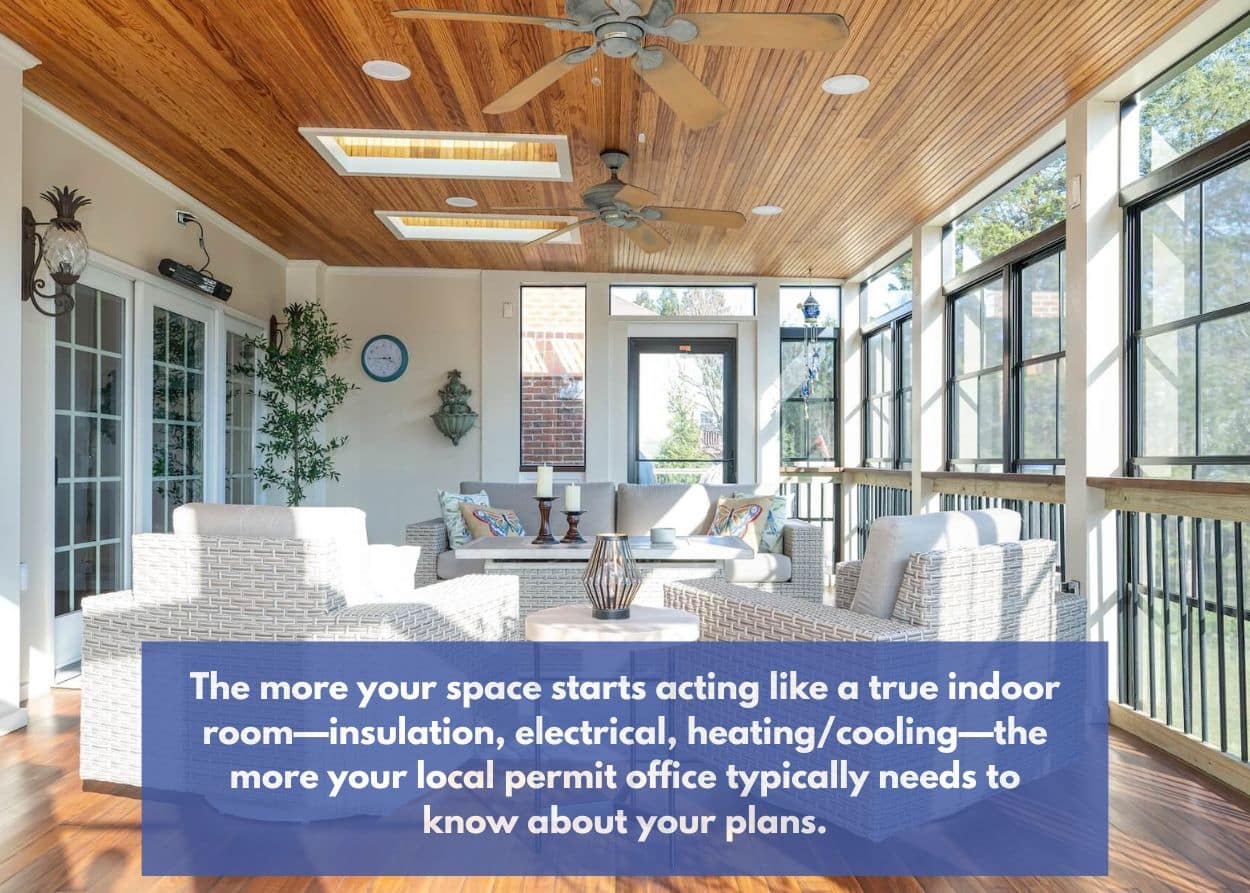
The more your space starts acting like a true indoor room—insulation, electrical, heating/cooling—the more your local permit office typically needs to know about your plans.
Want to learn more about screened-in porches or three-season porches as an alternative to a sunroom? Check out these articles:
Inspections: What to Expect, and What They Protect You From
Inspections can feel annoying. But they’re really a quality-control system, catching problems while they’re still easy to fix.
Many sunroom projects include inspections such as:
- Footing/foundation inspection (before concrete)
- Framing inspection (before everything gets covered up)
- Electrical/mechanical/plumbing inspections (if those trades are part of the scope)
- Final inspection (to close the permit)
Counties like Fairfax explain that once a permit is issued and construction begins, inspections are required at certain stages.
If your sunroom is tied into your existing roofline, inspections also protect you from the most common long-term headache: leaks. If the roof connection is sloppy, water will eventually seep in.
The Paperwork Checklist: Eight Items That Make Permits Move Faster
Want the permit process to go more smoothly? Give the reviewer everything they need up front so they don’t have to send your plans back with questions.
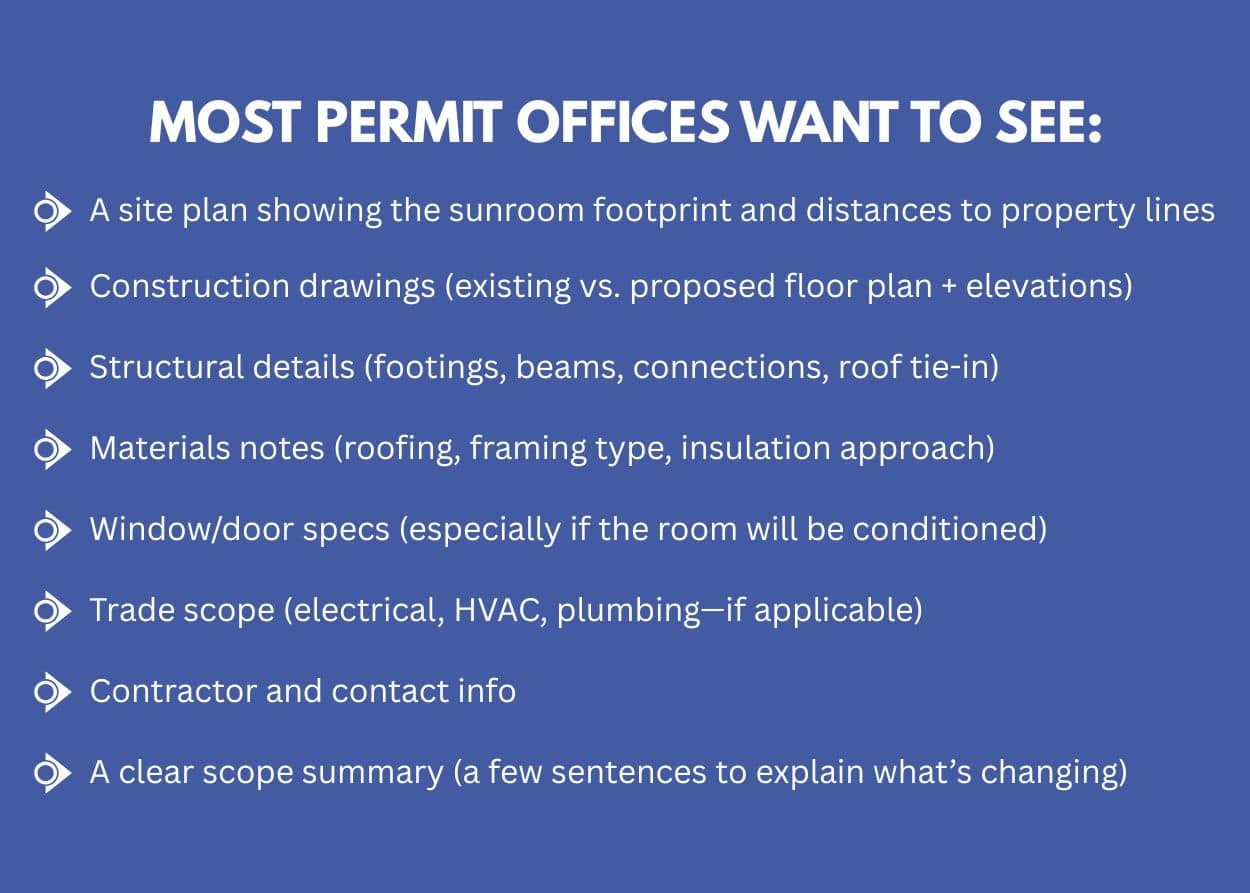
Most permit offices want to see:
- A site plan showing the sunroom footprint and distances to property lines
- Construction drawings (existing vs. proposed floor plan + elevations)
- Structural details (footings, beams, connections, roof tie-in)
- Materials notes (roofing, framing type, insulation approach)
- Window/door specs (especially if the room will be conditioned)
- Trade scope (electrical, HVAC, plumbing—if applicable)
- Contractor and contact info
- A clear scope summary (a few sentences to explain what’s changing)
Arlington County, for example, outlines residential permit requirements and emphasizes submitting the right plans and information through its online process.
Also, remember that many areas separate “building” permits from “trade” permits (electrical, mechanical, plumbing).
So what should you prepare before you ever call the permit office?
A quick homeowner pre-check:
- Your plat or survey (PDF is fine)
- Photos of the back of the home and the build area
- Your “must-haves” list (outlets, ceiling fan, skylights, heat/AC, etc.)
- Any HOA exterior rules you’ve been given
- A target use for the space (plants, dining, kids, quiet reading, home office)
When you answer these up front, your contractor can design faster, and your permit set is less likely to bounce back for clarifications.
How Long the Permit Process Takes (and Seven Common Causes of Delay)
You might be wondering, “How long will this take?”
Unfortunately, permit timelines vary a lot.
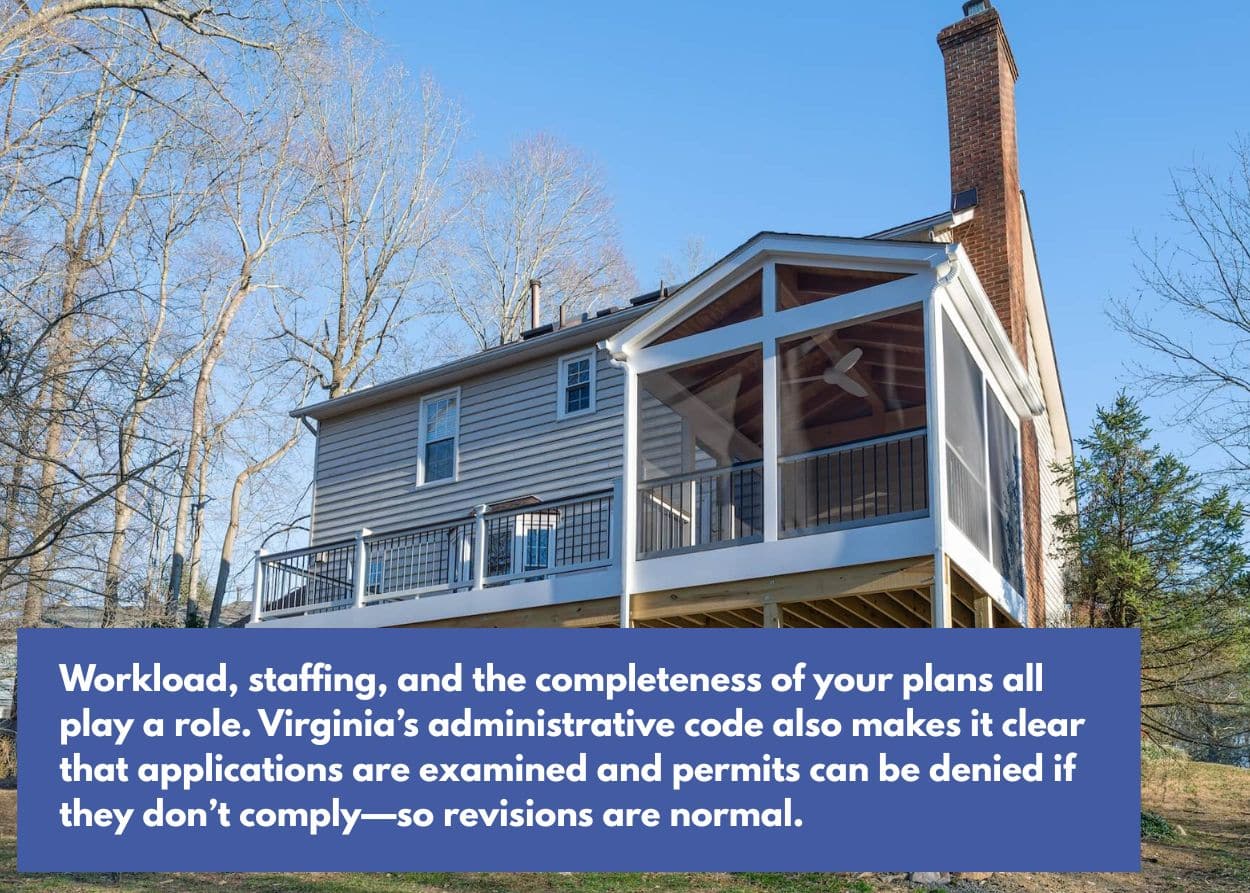
Workload, staffing, and the completeness of your plans all play a role. Virginia’s administrative code also makes it clear that applications are examined and permits can be denied if they don’t comply—so revisions are normal.
Here are seven common delays homeowners can actually prevent:
- Missing or outdated survey/plat
- Setback conflicts found during zoning review
- Incomplete structural details (especially roof tie-ins)
- Unclear scope (screened-in porch vs. three-season vs. year-round)
- Trade permits started late (electrical/mechanical/plumbing)
- Changes mid-review (moving walls, windows, doors)
- HOA approval coming after plans are submitted
Clean plans reduce “permit ping-pong.” Every time the reviewer has to guess, they send it back for clarification.
And if you live in a town inside a county (like the town of Leesburg in Loudoun County), there may be an extra step: the town’s zoning approval may need to happen before the county issues the building permit.
The Real Risks of Building Without a Permit in Virginia
Skipping permits feels tempting when you’re impatient, but it can backfire in expensive ways, including:
- Stop-work orders
- Fines and added fees
- Having to open up finished walls or ceilings for inspection
- Insurance questions after a claim
- Resale problems when buyers or appraisers ask about unpermitted work
The bottom line: skipping permits is really not worth the risk.
Arlington County, for example, outlines residential permit requirements and emphasizes submitting the right plans and information through its online process.
Also, remember that many areas separate “building” permits from “trade” permits (electrical, mechanical, plumbing).
So what should you prepare before you ever call the permit office?
A quick homeowner pre-check:
- Your plat or survey (PDF is fine)
- Photos of the back of the home and the build area
- Your “must-haves” list (outlets, ceiling fan, skylights, heat/AC, etc.)
- Any HOA exterior rules you’ve been given
- A target use for the space (plants, dining, kids, quiet reading, home office)
When you answer these up front, your contractor can design faster, and your permit set is less likely to bounce back for clarifications.
Conclusion: The Stress-Free Way to Start Your Sunroom
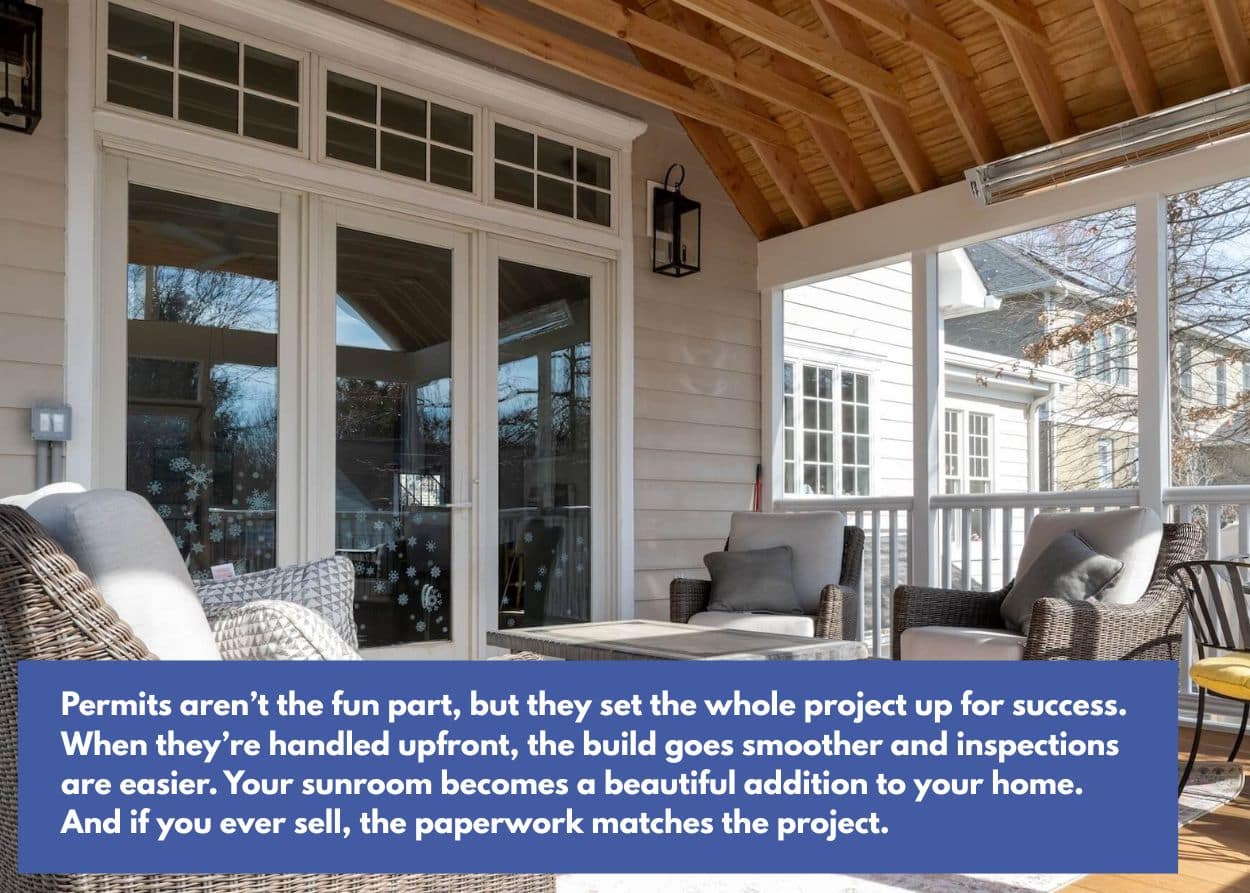
Permits aren’t the fun part, but they set the whole project up for success. When they’re handled upfront, the build goes smoother and inspections are easier. Your sunroom becomes a beautiful addition to your home. And if you ever sell, the paperwork matches the project.
If you want to take the next steps:
- Decide how you’ll use the space.
- Find your property plat or survey, then use it to check your setback lines and any easements so you know exactly where the sunroom can go.
- Choose a contractor who can create clear plans and help you navigate the permit and inspection process from start to finish.
If you’re in Northern Virginia, schedule a free on-site consultation with Fortress Construction to talk through your goals and get a clear plan for moving forward.